Freedom in the Open Office
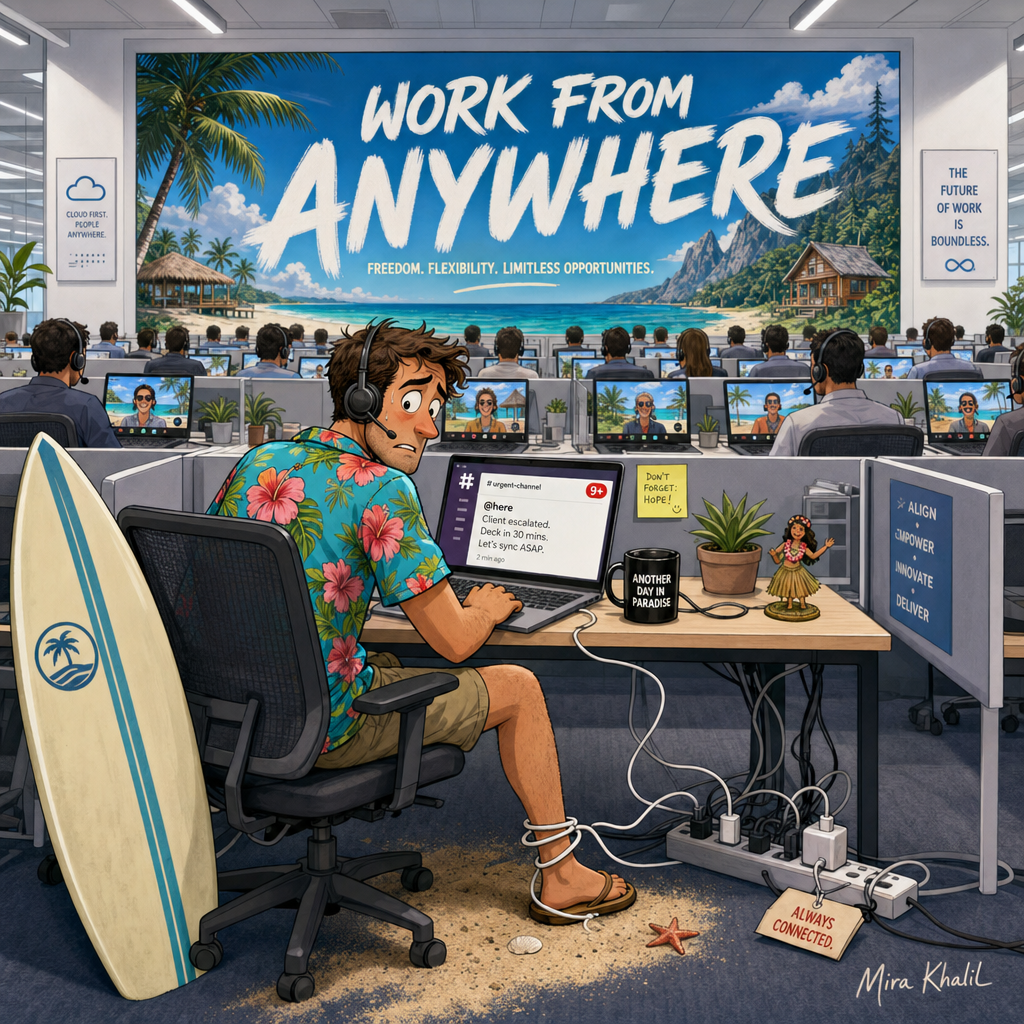
Corporate flexibility is exposed as branding theater: employers market autonomy and adventure, but workers are still tightly managed, standardized, and psychologically on-call. The humor comes from the gap between the language of liberation and the reality of digital leash culture.
A glossy open-plan tech office is staged like a travel ad. Across the back wall, an oversized mural proclaims WORK FROM ANYWHERE in airy inspirational lettering. Beneath it, rows of employees sit packed elbow-to-elbow at identical hot desks, all on laptops in the same posture, each visible on video calls with artificial paradise backgrounds—beaches, cabanas, mountain lodges. In the foreground, one employee has gone all-in on the promise: a surfboard leans against their desk, a little drift of sand has spilled under their chair, and they wear a floral shirt under a corporate headset. But their ankle is subtly looped by charger cords and power-strip cables like a tether, and they glance anxiously at an urgent Slack ping on screen. The office remains sterile and immobile while everyone performs mobility theatrically.