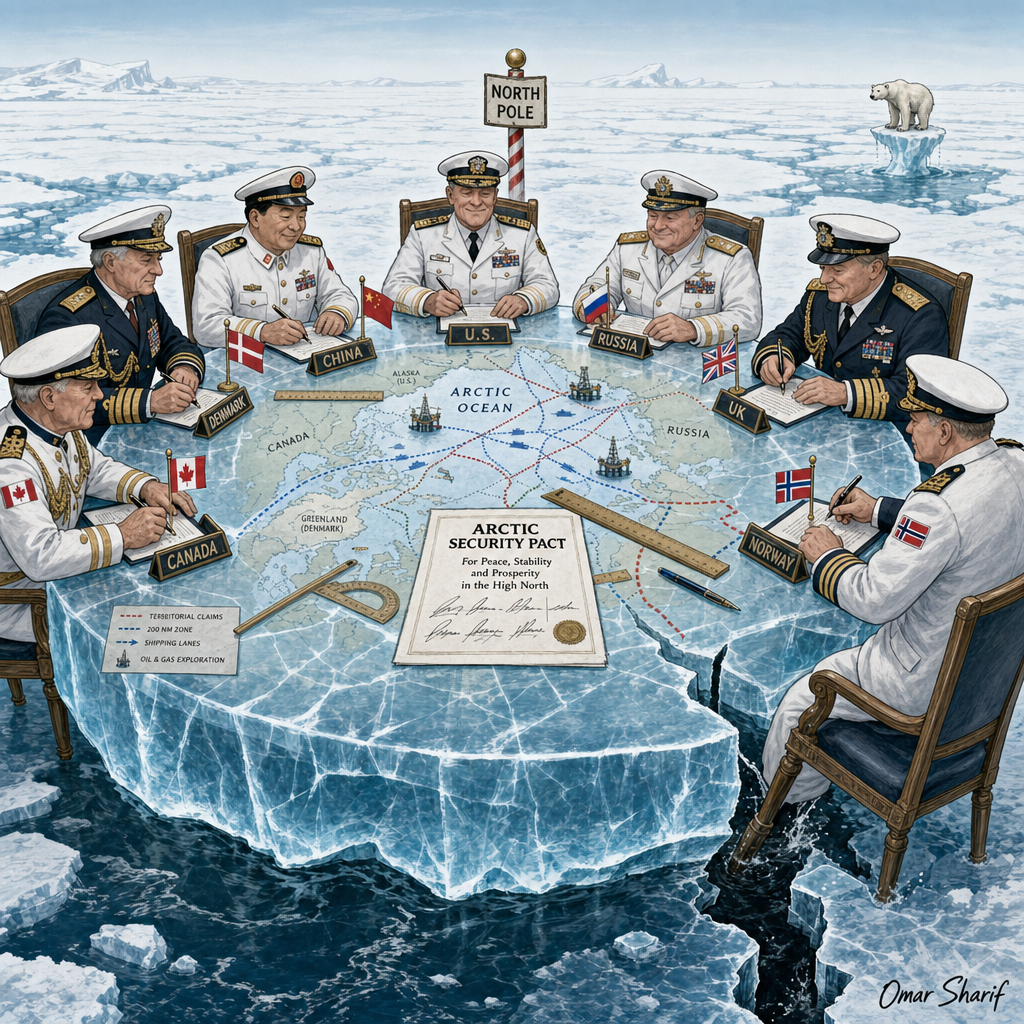
Ceasefire at the Melt Line
It mocks great-power diplomacy as elegantly managed self-interest: leaders congratulate themselves for maintaining order while exploiting climate breakdown, treating catastrophe not as an emergency to stop but as a newly opened market to administer.
At the exact North Pole, a ring of rival admirals in immaculate dress uniforms sit in solemn summit poses around a glossy conference table carved from a single translucent ice floe. On top of the table lies a tidy map of the Arctic, already marked with rulers, dotted boundary lines, tiny flags, shipping routes, and oil-drill icons as they sign a 'security pact' with ceremonial pens and composed expressions. Through the clear ice tabletop, the viewer can see deep fractures racing outward and seawater sloshing below; one admiral’s chair leg is already slipping into the widening crack. In the background, a polar bear balances on a pathetic shard of ice, nearly unnoticed. The joke is that the men look as if they are preventing conflict while literally seated inside the collapse that creates the spoils they are dividing.
More in International
 International
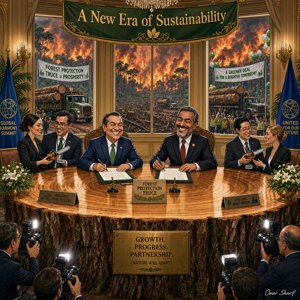
Ceasefire in the Ashes
The cartoon targets performative environmental diplomacy: leaders congratulate themselves for 'protecting' nature only after profiting from its destruction, turning a ceasefire into a photo-op staged atop the corpse of the very forest they claim to save.
by Omar Sharif
 International
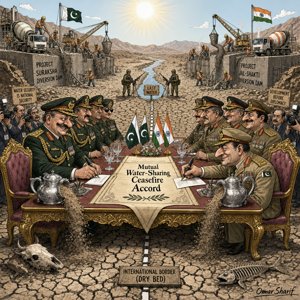
Ceasefire at the Dry River
The cartoon mocks performative diplomacy: leaders publicly celebrate cooperation and peace while their actual policies make the agreement meaningless. It satirizes how states negotiate over scarcity as though it were natural or unavoidable, even while militarized infrastructure and nationalist self-
by Omar Sharif
 International
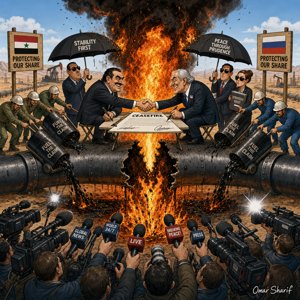
Ceasefire on a Burning Pipeline
The cartoon mocks peace theater: leaders publicly celebrate restraint while privately sustaining the very conflict their wealth and leverage depend on. It satirizes how resource wars are managed as public-relations exercises, with the disaster reframed as a negotiable border problem rather than an e
by Omar Sharif