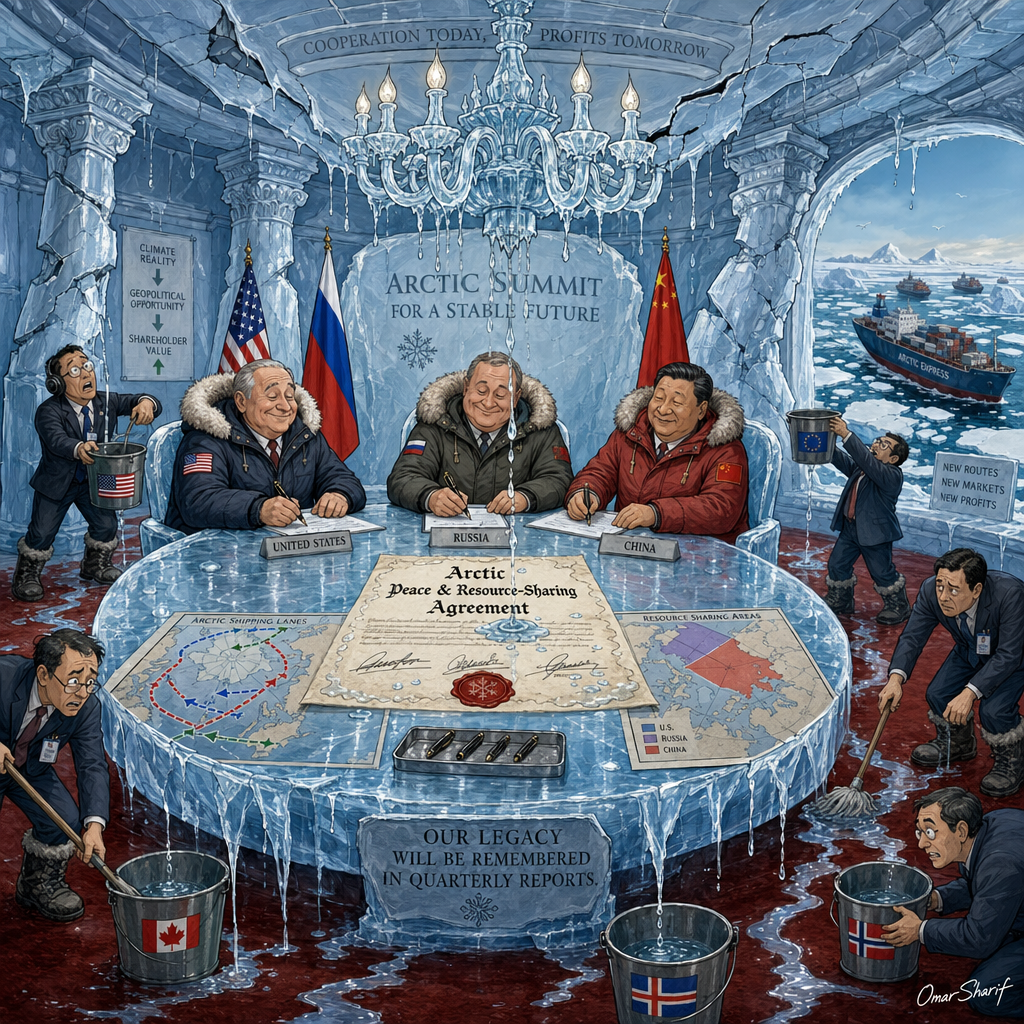
Ceasefire Under the Melting Ceiling
Diplomacy is presented as polished, civilized, and cooperative, but only because climate collapse has created profitable new territory to divide. The cartoon mocks leaders for congratulating themselves on peaceful management of spoils while ignoring that the source of those spoils is the destruction
An opulent diplomatic summit chamber is carved entirely from blue-white glacier ice: vaulted ceiling, fluted columns, chandelier, even the polished conference table. Two or three rival foreign ministers in bulky parkas sit stiffly beneath tiny national flags, smiling for cameras as they sign a document titled 'Arctic Peace & Resource-Sharing Agreement' with attached maps dividing shipping lanes and drilling blocks. The satire lands in the surroundings: the chandelier is dripping onto the treaty, the ceiling bows downward, columns slump, and meltwater runs across the red carpet into hastily placed buckets labeled with different countries' flags. Aides in suits and snow boots mop frantically while trying to preserve the ceremony. Through an ice window, cracked sea ice and passing cargo ships suggest the newly opened routes. The ministers remain composed and ceremonial, treating catastrophe as a business opportunity while the room itself dissolves.
More in International
 International
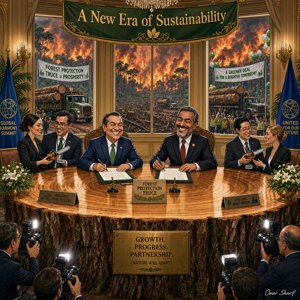
Ceasefire in the Ashes
The cartoon targets performative environmental diplomacy: leaders congratulate themselves for 'protecting' nature only after profiting from its destruction, turning a ceasefire into a photo-op staged atop the corpse of the very forest they claim to save.
by Omar Sharif
 International
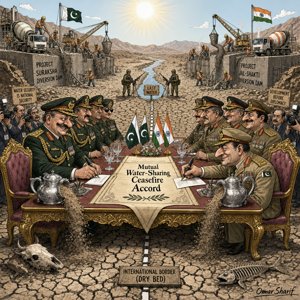
Ceasefire at the Dry River
The cartoon mocks performative diplomacy: leaders publicly celebrate cooperation and peace while their actual policies make the agreement meaningless. It satirizes how states negotiate over scarcity as though it were natural or unavoidable, even while militarized infrastructure and nationalist self-
by Omar Sharif
 International
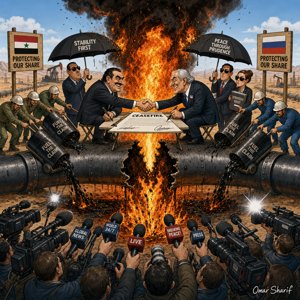
Ceasefire on a Burning Pipeline
The cartoon mocks peace theater: leaders publicly celebrate restraint while privately sustaining the very conflict their wealth and leverage depend on. It satirizes how resource wars are managed as public-relations exercises, with the disaster reframed as a negotiable border problem rather than an e
by Omar Sharif