Ceasefire at the Glacier
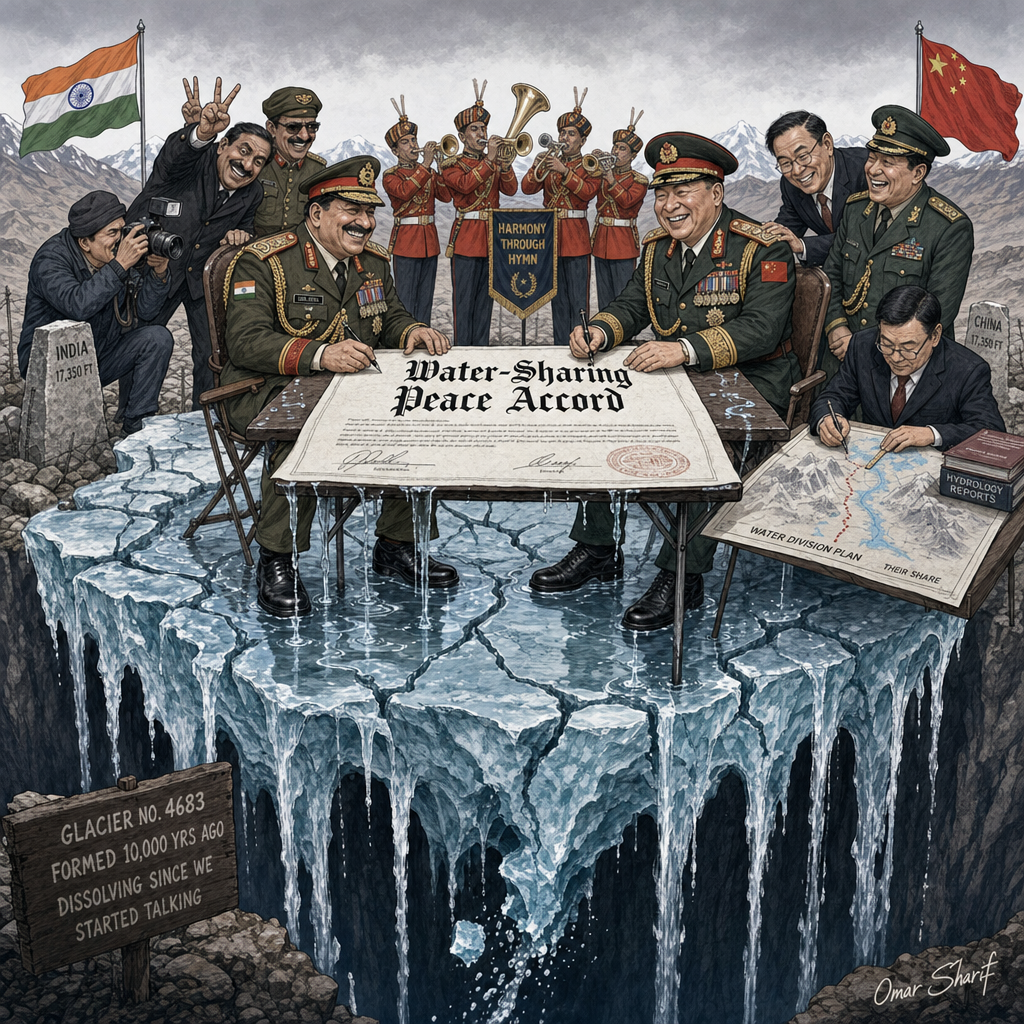
Diplomacy is mocked as performative triumph over a crisis leaders have already allowed to slip away: they celebrate cooperation and division of a shared resource at the exact moment that resource is vanishing. The joke is not that peace is bad, but that political theater treats ecological collapse a
On a barren, high-altitude border ridge, two rival generals in ornate dress uniforms sit stiffly at a flimsy folding table planted directly atop the last intact slab of glacier. They beam for cameras as they sign a grandly titled 'Water-Sharing Peace Accord,' with aides leaning in for the photo-op, soldiers presenting ceremonial flags, and a brass band puffing through an anthem. The satire lands in the setting: the glacier has melted down to a thin, translucent pedestal beneath the table, spiderwebbed with cracks, with streams of meltwater pouring off all sides into the abyss. One clerk carefully draws dividing lines on a map while the actual water drips away under everyone’s boots. The image should make the pageant of statecraft look precise, formal, and absurdly late.
More in International
 International
Ceasefire in the Ashes
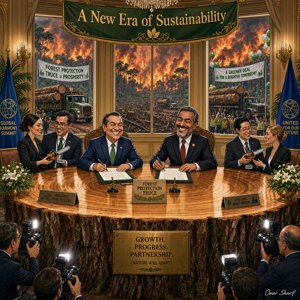
The cartoon targets performative environmental diplomacy: leaders congratulate themselves for 'protecting' nature only after profiting from its destruction, turning a ceasefire into a photo-op staged atop the corpse of the very forest they claim to save.
by Omar Sharif
 International
Ceasefire at the Dry River
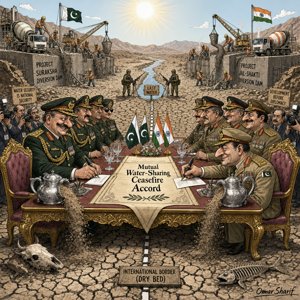
The cartoon mocks performative diplomacy: leaders publicly celebrate cooperation and peace while their actual policies make the agreement meaningless. It satirizes how states negotiate over scarcity as though it were natural or unavoidable, even while militarized infrastructure and nationalist self-
by Omar Sharif
 International
Ceasefire on a Burning Pipeline
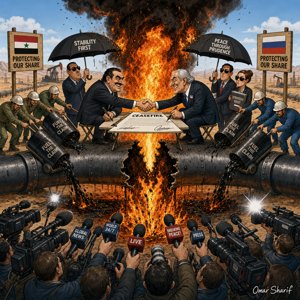
The cartoon mocks peace theater: leaders publicly celebrate restraint while privately sustaining the very conflict their wealth and leverage depend on. It satirizes how resource wars are managed as public-relations exercises, with the disaster reframed as a negotiable border problem rather than an e
by Omar Sharif