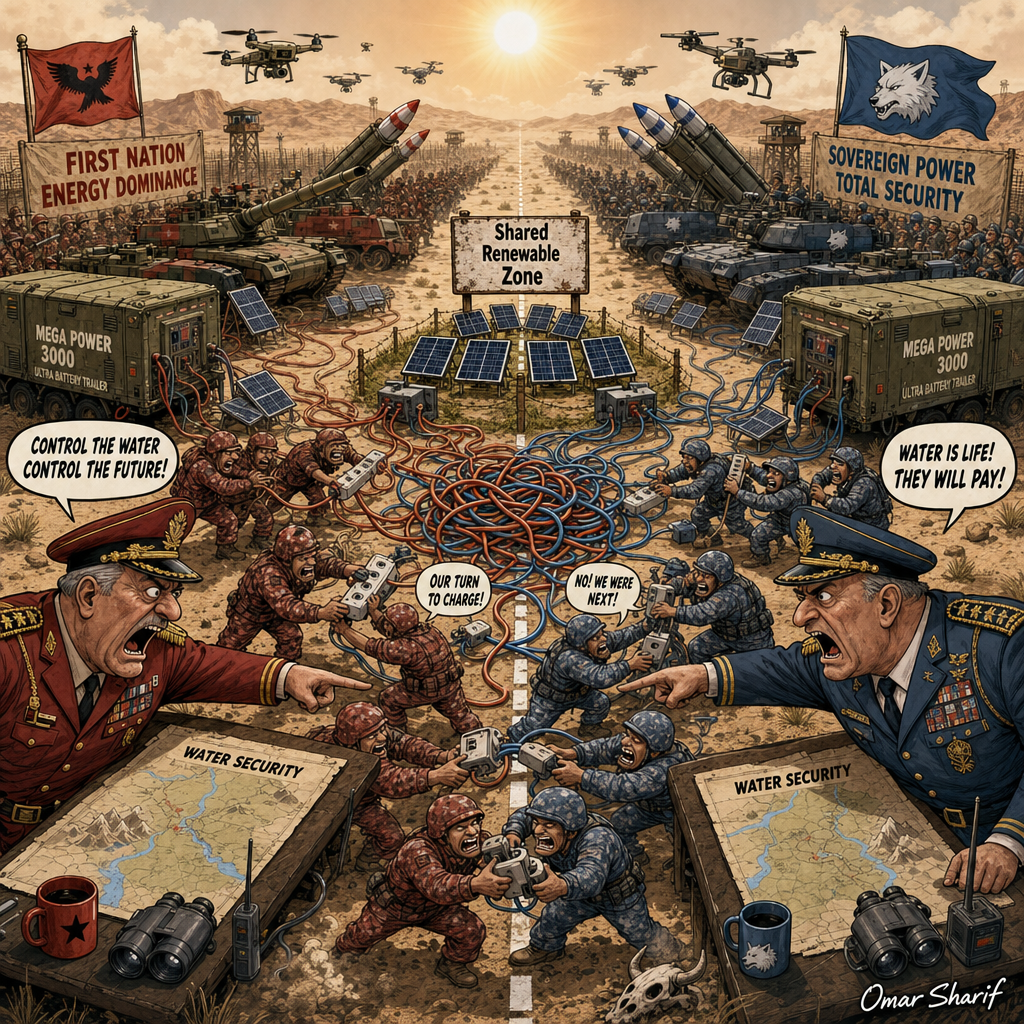
Charging the Water Wars
The cartoon mocks the fantasy of fighting resource wars in a supposedly green future: nations may replace oil with clean energy, but they still cling to militarism and rivalry—even when the infrastructure they depend on only functions through sharing, interdependence, and mutual restraint.
At a sun-blasted desert border, two hostile armies stage a massive standoff with electric tanks, missile launchers, and drones—all awkwardly tethered to oversized battery trailers and folding solar chargers. The border itself is absurdly defined by a tiny shared solar farm sitting directly on the line, with thick extension cords from both sides tangled together in the sand. While the generals strike aggressive poses and point toward war maps labeled 'Water Security,' soldiers from both nations are actually wrestling over power strips, adapter plugs, and charging priority. A sign near the solar farm reads 'Shared Renewable Zone,' undercutting the militarism with the reality that neither side can even power its war machine without the same fragile cooperative grid.
More in International
 International
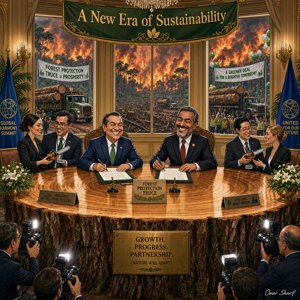
Ceasefire in the Ashes
The cartoon targets performative environmental diplomacy: leaders congratulate themselves for 'protecting' nature only after profiting from its destruction, turning a ceasefire into a photo-op staged atop the corpse of the very forest they claim to save.
by Omar Sharif
 International
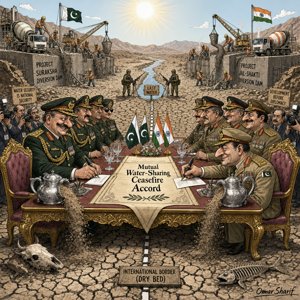
Ceasefire at the Dry River
The cartoon mocks performative diplomacy: leaders publicly celebrate cooperation and peace while their actual policies make the agreement meaningless. It satirizes how states negotiate over scarcity as though it were natural or unavoidable, even while militarized infrastructure and nationalist self-
by Omar Sharif
 International
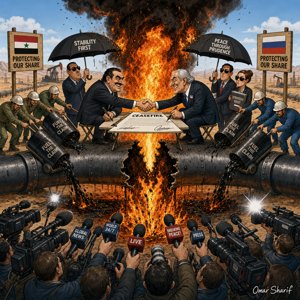
Ceasefire on a Burning Pipeline
The cartoon mocks peace theater: leaders publicly celebrate restraint while privately sustaining the very conflict their wealth and leverage depend on. It satirizes how resource wars are managed as public-relations exercises, with the disaster reframed as a negotiable border problem rather than an e
by Omar Sharif