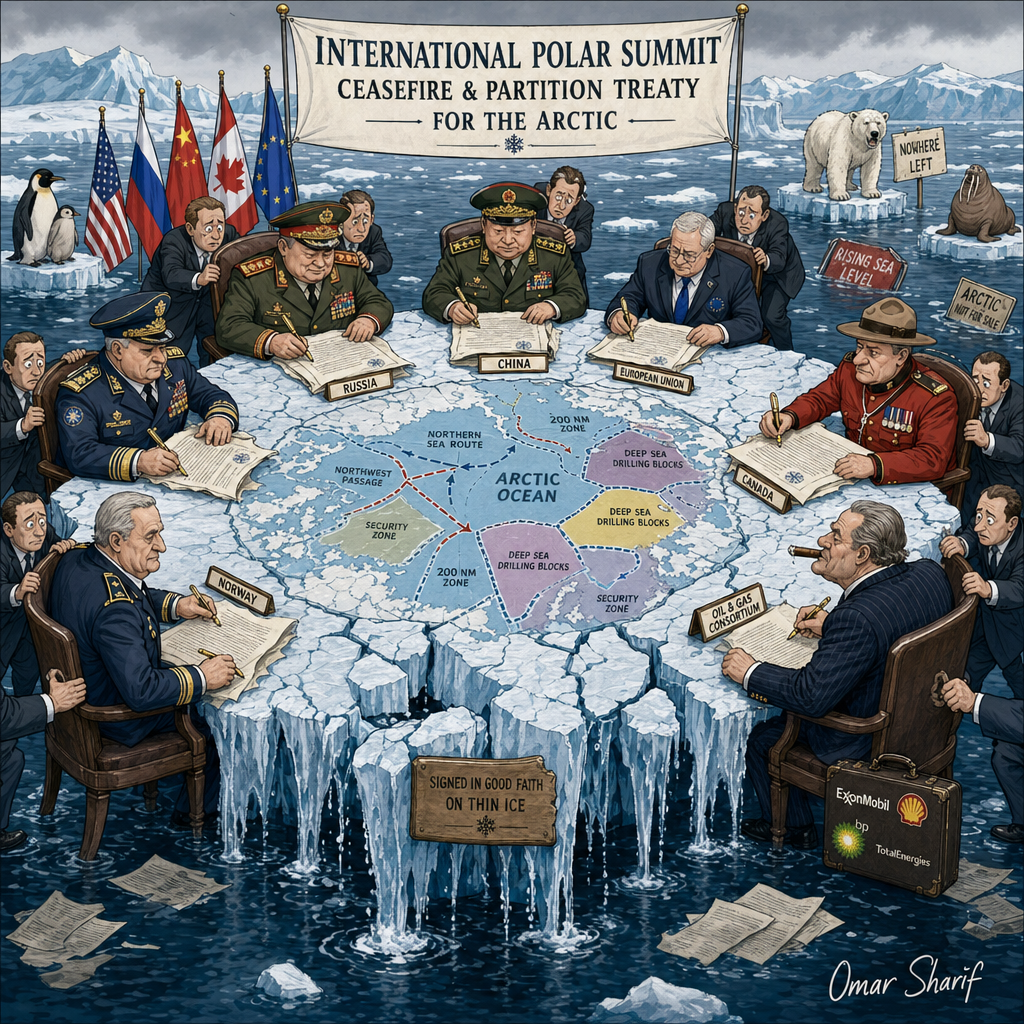
Ceasefire at the Last Glacier
The cartoon mocks geopolitical and corporate leaders for treating climate collapse as a tidy opportunity for profit and strategic advantage. Their diplomacy appears civilized and responsible, but it is really a scramble to divide spoils from a disaster they are accelerating and refusing to confront.
At an international polar summit, decorated generals, ministers, and oil executives sit in stiff ceremonial formality around a grand negotiating table chiseled from the planet’s last remaining glacier. With tiny gold pens, they sign a solemn ‘ceasefire’ and partition map assigning Arctic shipping lanes, drilling blocks, and security zones. The absurd calm is the point: beneath their elbows, the ice-table is visibly melting away, corners collapsing, treaty papers curling from the damp, and meltwater dripping into the sea below. Aides keep sliding the chairs inward as the negotiators continue pretending the arrangement is stable. In the distance, stranded wildlife and half-submerged warning signs underscore that the world they are dividing is vanishing in real time.
More in International
 International
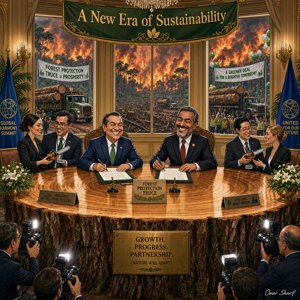
Ceasefire in the Ashes
The cartoon targets performative environmental diplomacy: leaders congratulate themselves for 'protecting' nature only after profiting from its destruction, turning a ceasefire into a photo-op staged atop the corpse of the very forest they claim to save.
by Omar Sharif
 International
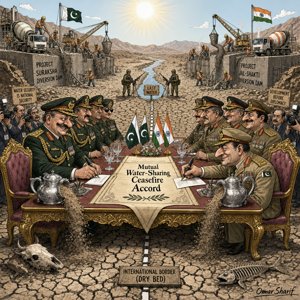
Ceasefire at the Dry River
The cartoon mocks performative diplomacy: leaders publicly celebrate cooperation and peace while their actual policies make the agreement meaningless. It satirizes how states negotiate over scarcity as though it were natural or unavoidable, even while militarized infrastructure and nationalist self-
by Omar Sharif
 International
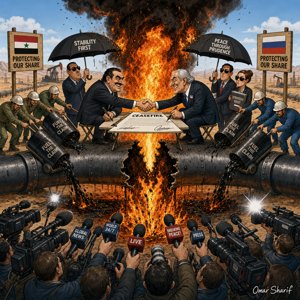
Ceasefire on a Burning Pipeline
The cartoon mocks peace theater: leaders publicly celebrate restraint while privately sustaining the very conflict their wealth and leverage depend on. It satirizes how resource wars are managed as public-relations exercises, with the disaster reframed as a negotiable border problem rather than an e
by Omar Sharif