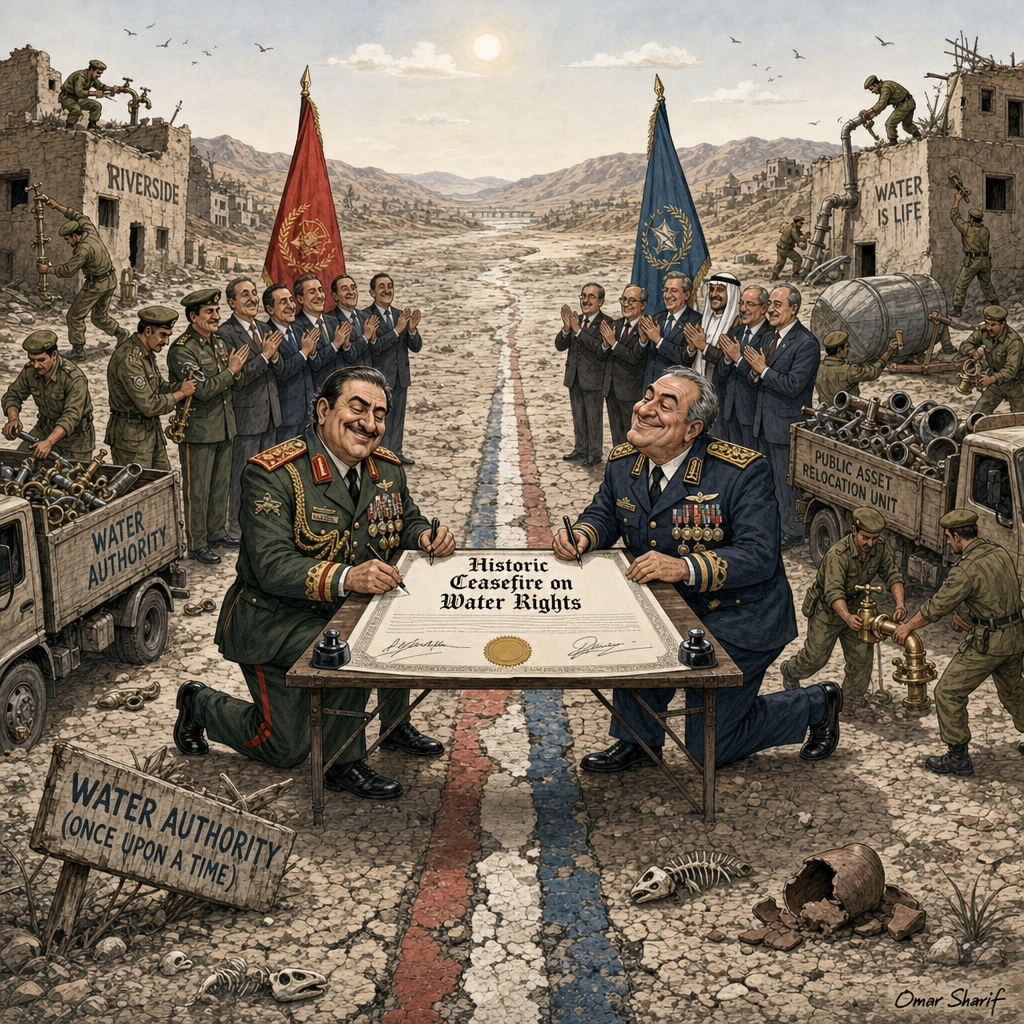
Ceasefire at the Waterline
Leaders celebrate a noble peace over scarce resources only after their own systems have helped exhaust and loot those resources; the ceasefire is less a moral breakthrough than a ceremonial agreement over an empty prize.
In a wide editorial-cartoon scene, two rival defense ministers in pristine, medal-heavy uniforms kneel with exaggerated solemnity at a tiny folding table placed exactly across a faded border stripe running through the middle of a dead riverbed. They smile for cameras as they sign a grand 'Historic Ceasefire on Water Rights' document, with diplomats applauding behind them under ceremonial flags. The satire lands in the background: the river is completely dry and cracked like broken pottery, stranded fish bones lie nearby, and on both sides soldiers and officials are discreetly stripping abandoned villages of their last plumbing—unscrewing brass faucets, hauling pipes, and loading water tanks onto trucks. A weathered sign reading 'Riverside' or 'Water Authority' leans absurdly over dust. The scene should make clear that the treaty preserves the formality of peace while the substance being fought over has already been squandered.
More in International
 International
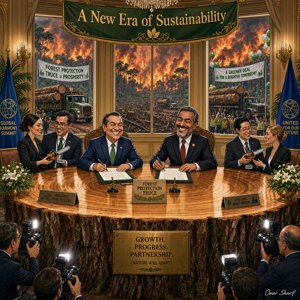
Ceasefire in the Ashes
The cartoon targets performative environmental diplomacy: leaders congratulate themselves for 'protecting' nature only after profiting from its destruction, turning a ceasefire into a photo-op staged atop the corpse of the very forest they claim to save.
by Omar Sharif
 International
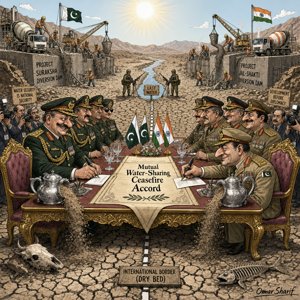
Ceasefire at the Dry River
The cartoon mocks performative diplomacy: leaders publicly celebrate cooperation and peace while their actual policies make the agreement meaningless. It satirizes how states negotiate over scarcity as though it were natural or unavoidable, even while militarized infrastructure and nationalist self-
by Omar Sharif
 International
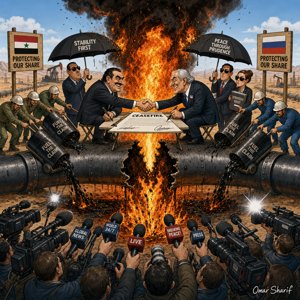
Ceasefire on a Burning Pipeline
The cartoon mocks peace theater: leaders publicly celebrate restraint while privately sustaining the very conflict their wealth and leverage depend on. It satirizes how resource wars are managed as public-relations exercises, with the disaster reframed as a negotiable border problem rather than an e
by Omar Sharif