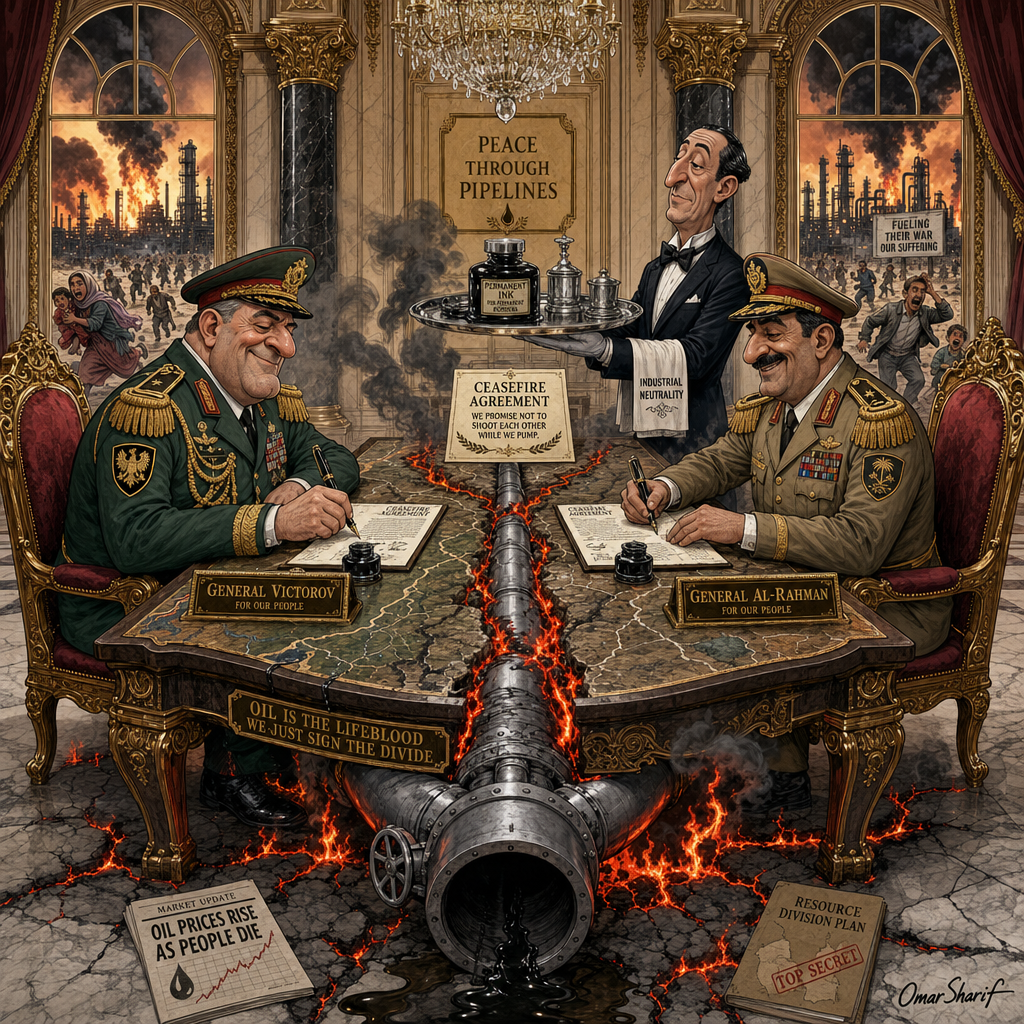
Ceasefire on a Burning Pipeline
The cartoon mocks elite peace-making that treats war and resource extraction as a tidy territorial dispute, even when the infrastructure being negotiated is the very source of the devastation. It satirizes diplomatic theater: the ceasefire appears civilized and stabilizing, but it is really a negoti
In an opulent peace chamber, two rival generals in spotless dress uniforms sit across from each other at a gleaming negotiation table, smiling stiffly as they sign a ceasefire. The tabletop is revealed to be a giant cross-section of an oil pipeline corridor map, but the 'map' is actually the real pipeline running under the room: split seams glow red, flames burst up through cracks in the polished floor, and smoke snakes around the treaty papers and fountain pens. An aide holds a silver tray of ink while ignoring the heat. Through tall windows behind them, civilians run past refinery towers silhouetted against an orange inferno. The visual joke is that the leaders are calmly dividing and pacifying territory that is literally already on fire beneath their elbows.
More in International
 International
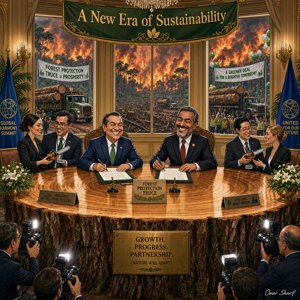
Ceasefire in the Ashes
The cartoon targets performative environmental diplomacy: leaders congratulate themselves for 'protecting' nature only after profiting from its destruction, turning a ceasefire into a photo-op staged atop the corpse of the very forest they claim to save.
by Omar Sharif
 International
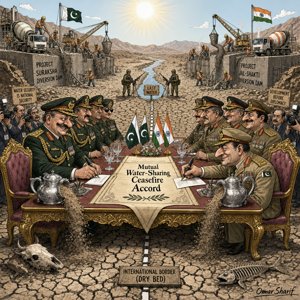
Ceasefire at the Dry River
The cartoon mocks performative diplomacy: leaders publicly celebrate cooperation and peace while their actual policies make the agreement meaningless. It satirizes how states negotiate over scarcity as though it were natural or unavoidable, even while militarized infrastructure and nationalist self-
by Omar Sharif
 International
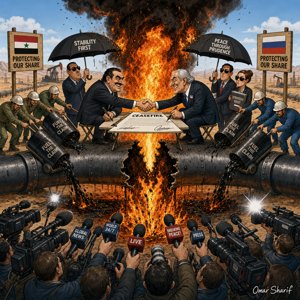
Ceasefire on a Burning Pipeline
The cartoon mocks peace theater: leaders publicly celebrate restraint while privately sustaining the very conflict their wealth and leverage depend on. It satirizes how resource wars are managed as public-relations exercises, with the disaster reframed as a negotiable border problem rather than an e
by Omar Sharif