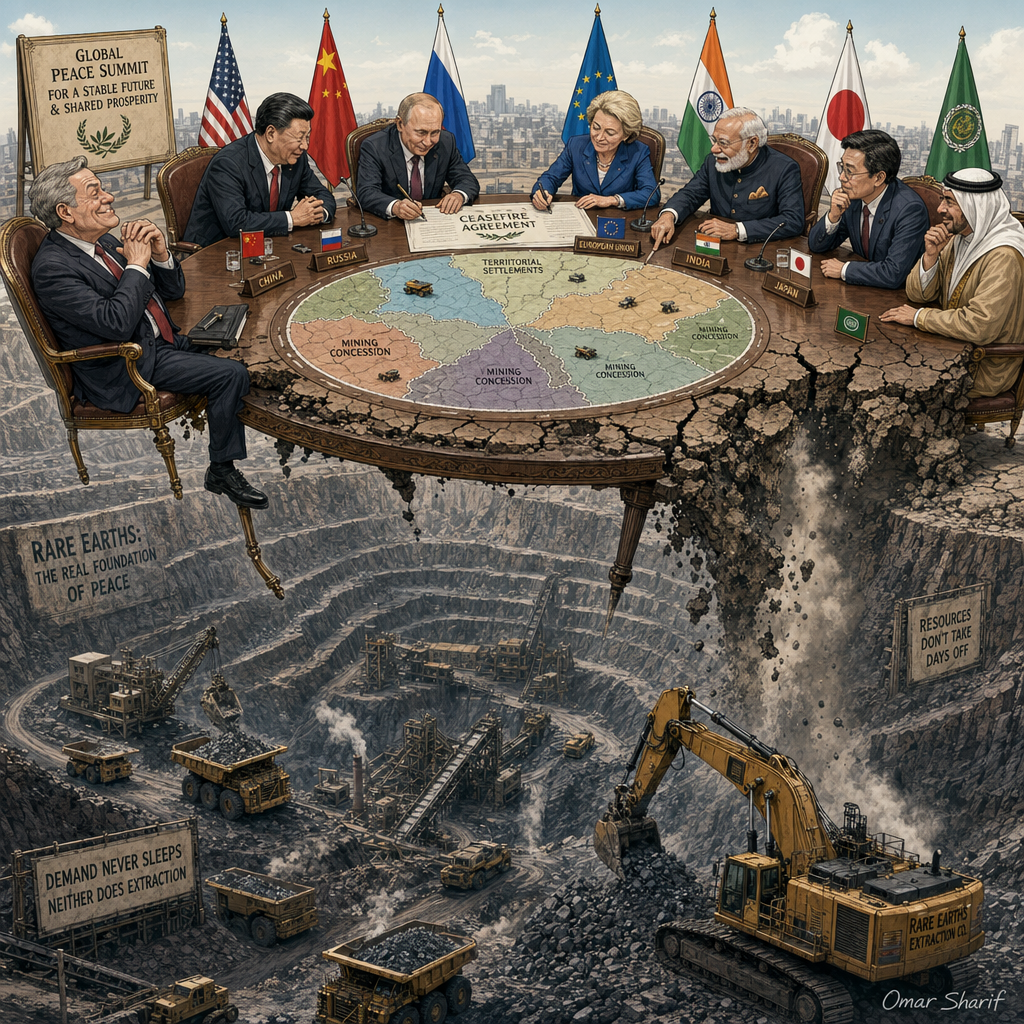
Peace Summit, Smoking Crater
Peace is treated not as a moral achievement but as a more efficient administrative tool for managing exploitation. The cartoon mocks leaders who congratulate themselves for ending conflict while preserving the greed that caused it, suggesting their diplomacy is less about resolving the crisis than a
An elegant international peace summit is staged on a gleaming circular conference table perched precariously over the lip of a vast open-pit rare-earth mine. Delegates from rival nations, each with polished nameplates and tiny flags, lean forward to sign a ceasefire agreement while simultaneously haggling over territorial slices and extraction rights marked on maps spread across the table. Beneath them, the mine wall is actively crumbling; one chair leg hangs over empty space, another sinks into fractured ground, and dust plumes rise from fresh collapses below. In the crater, excavators and conveyor belts continue chewing away at the earth, making clear that the resource scramble has not paused for the peace talks. The visual punchline is that the diplomats are calmly dividing the spoils while the prize itself is being destroyed under their feet.
More in International
 International
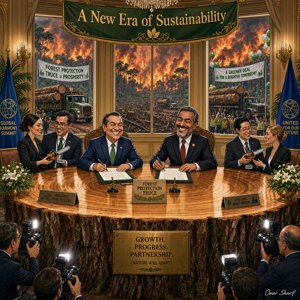
Ceasefire in the Ashes
The cartoon targets performative environmental diplomacy: leaders congratulate themselves for 'protecting' nature only after profiting from its destruction, turning a ceasefire into a photo-op staged atop the corpse of the very forest they claim to save.
by Omar Sharif
 International
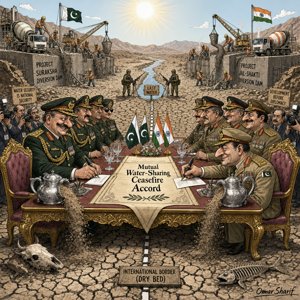
Ceasefire at the Dry River
The cartoon mocks performative diplomacy: leaders publicly celebrate cooperation and peace while their actual policies make the agreement meaningless. It satirizes how states negotiate over scarcity as though it were natural or unavoidable, even while militarized infrastructure and nationalist self-
by Omar Sharif
 International
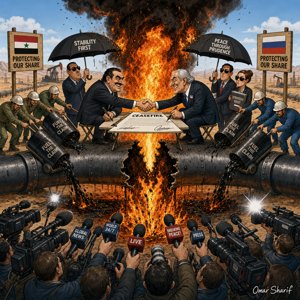
Ceasefire on a Burning Pipeline
The cartoon mocks peace theater: leaders publicly celebrate restraint while privately sustaining the very conflict their wealth and leverage depend on. It satirizes how resource wars are managed as public-relations exercises, with the disaster reframed as a negotiable border problem rather than an e
by Omar Sharif