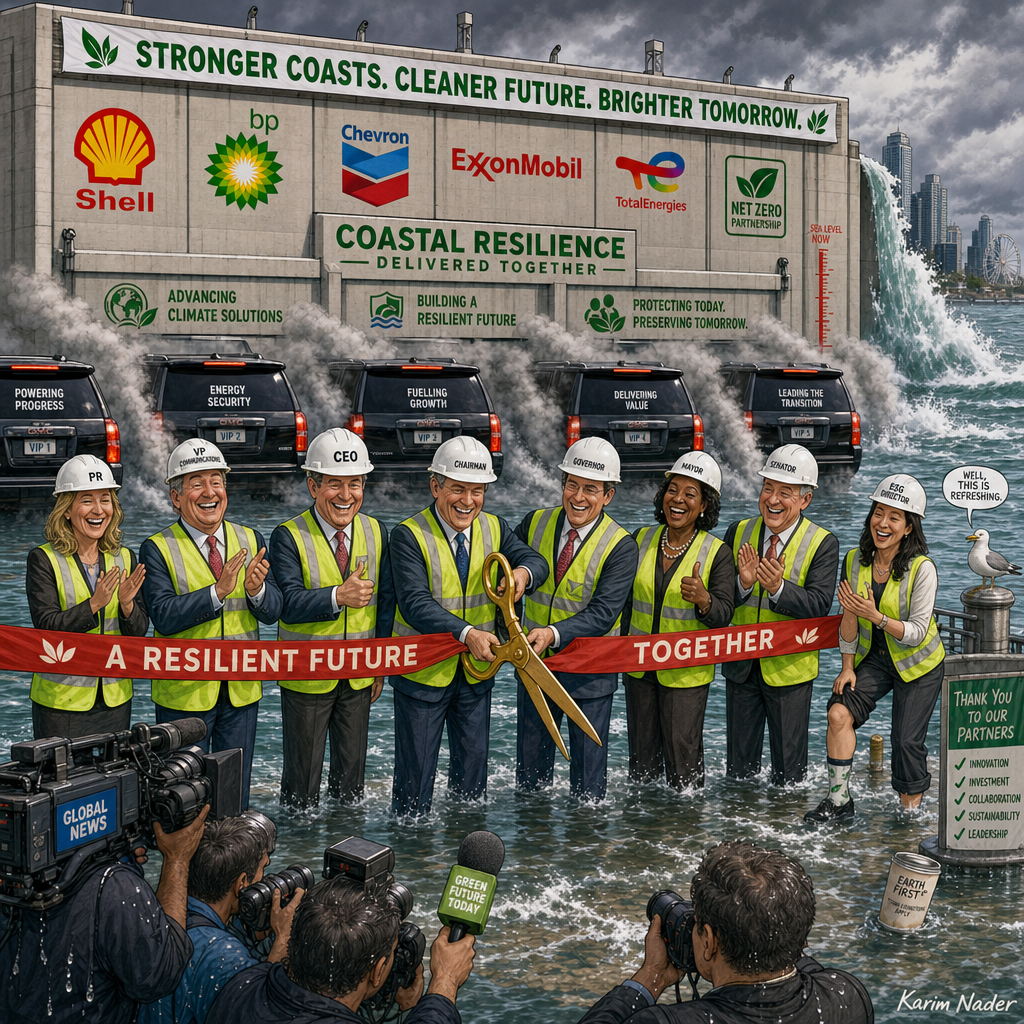
Ribbon-Cutting the Flood Barrier
The cartoon mocks elite climate pageantry: leaders and corporations publicly celebrate adaptation infrastructure while remaining financially and behaviorally tied to the fossil-fuel system causing the problem. It targets greenwashed self-congratulation, sponsorship politics, and the absurdity of tre
A single-panel editorial cartoon at a glossy waterfront ribbon-cutting. In the foreground, a line of executives, politicians, and PR staff in spotless hard hats and safety vests grin toward a bank of cameras as oversized ceremonial scissors slice a ribbon stretched across a newly built flood barrier. The wall is plastered with giant oil-company sponsor logos, leaf-patterned 'Net Zero Partnership' branding, and cheerful green slogans about resilience. Just behind the dignitaries, a convoy of black chauffeured SUVs sits idling nose-to-tail, tailpipes visibly puffing exhaust that drifts into the ceremony like a gray fog. The key irony: even as the ribbon is cut, seawater is already sloshing over the promenade and pooling around their polished dress shoes, with one aide discreetly lifting a pant leg while still applauding. Everyone maintains the photo-op smile, pretending the encroaching water is part of the celebration.
More in Environment
 Environment
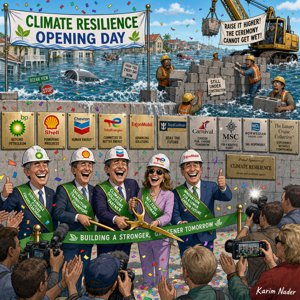
Ribbon-Cutting the Sea Wall
The cartoon mocks greenwashed crisis management: the same industries profiting from climate damage rebrand themselves as civic saviors, while politicians celebrate symbolic infrastructure and sponsorship optics over the obvious reality that the emergency is already outpacing the ceremony.
by Karim Nader
 Environment
Ribbon-Cutting the Sea Wall
Greenwashed real-estate hypocrisy: developers destroy the cheap, effective natural protection, then market and celebrate an expensive man-made substitute as proof of environmental responsibility.
by Karim Nader
 Environment
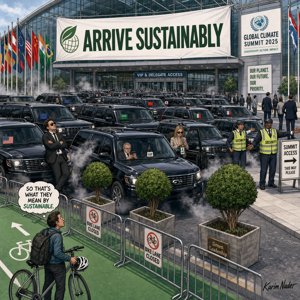
Net Zero Traffic Jam
Climate leadership as staged virtue: elites publicly market sustainability while building a real-world system that rewards convenience, status, and emissions, turning “green” into branding rather than behavior.
by Karim Nader