Open Source, Closed Exit
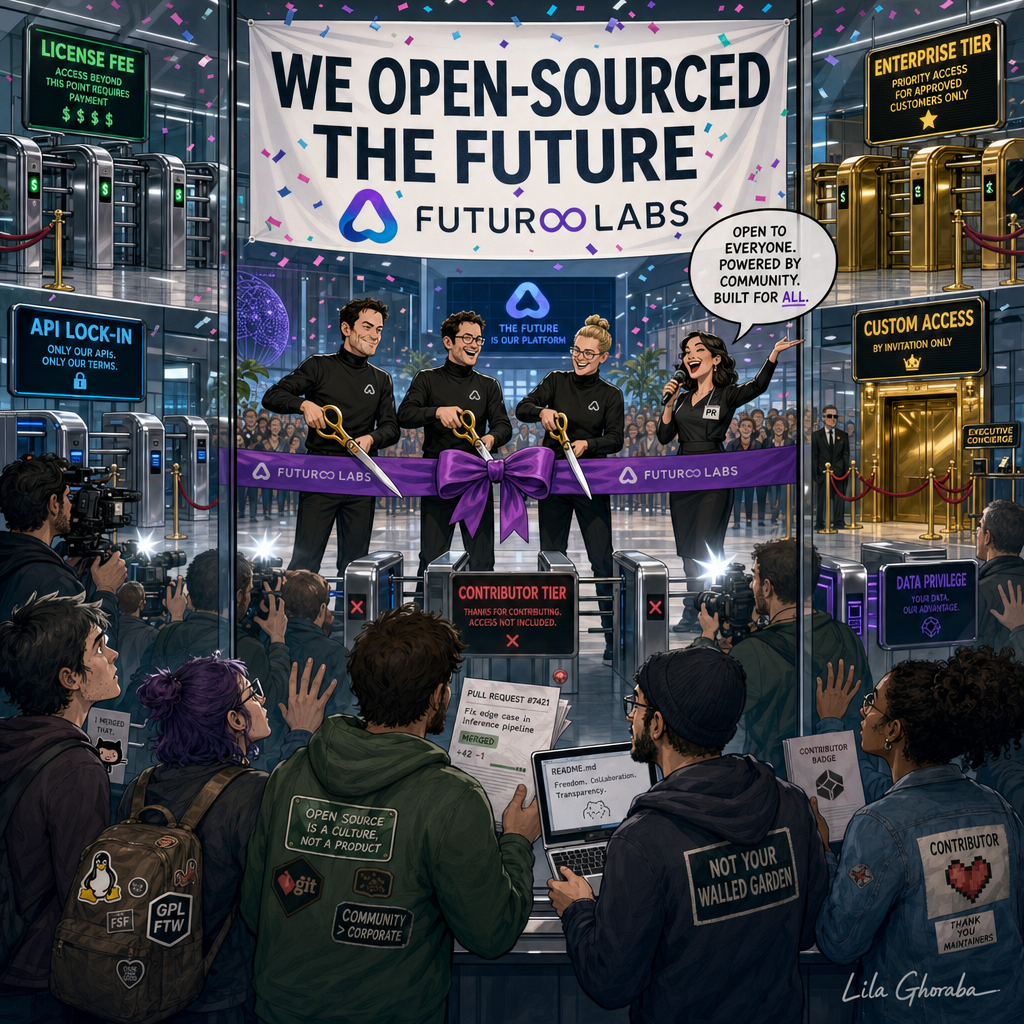
The cartoon mocks the tech industry's habit of branding selective release or publicity-friendly transparency as “open,” while the real business model is engineered around dependency, gated access, and monetizing participation. It satirizes openness as a ceremonial slogan rather than a lived structur
A glossy AI startup lobby staged like a triumphant product launch: confetti, cameras, and founders in minimalist turtlenecks cutting a giant ribbon beneath a huge slogan, “WE OPEN-SOURCED THE FUTURE.” The front glass wall makes the whole scene visible from outside, where indie developers and open-source contributors press up against it holding laptops, pull-request printouts, and contributor badges like excluded fans at an exhibit. Inside, the absurd reveal is that every actual exit and hallway in the building has been replaced by chrome turnstiles and pay gates labeled “LICENSE FEE,” “API LOCK-IN,” “ENTERPRISE TIER,” and maybe one velvet-rope door marked “CUSTOM ACCESS.” A smiling PR staffer gestures to the openness sign while ignoring the trapped, monetized pathways behind her. The image should make the contradiction instantly legible: symbolic openness up front, controlled dependency everywhere that matters.
More in Technology
 Technology
Emergency Exit Through Facial Recognition
The cartoon mocks the tech industry’s habit of treating optimization, surveillance, and compliance metrics as more real than human need—showing a system designed for safety becoming a deadly obstacle because institutional faith in frictionless security overrides common sense.
by Lila Ghoraba
 Technology
Open Source, Closed Exit
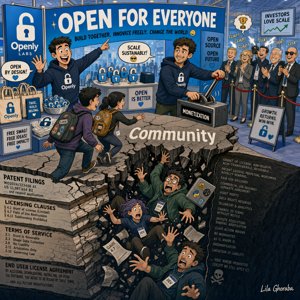
The cartoon targets performative openness in tech: companies market themselves as community-friendly and accessible, but use legal and financial mechanisms to convert shared participation into private control once value appears.
by Lila Ghoraba
 Technology
Open Office, Closed Future
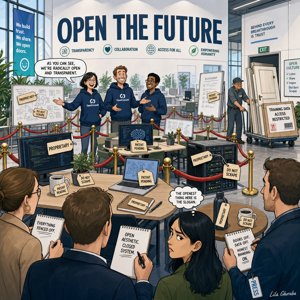
The cartoon mocks tech companies that market themselves as champions of openness, collaboration, and the public good while aggressively locking down data, models, and methods the moment real access is at stake. Their openness is architectural and aesthetic, not substantive.
by Lila Ghoraba